
Quick Summary
For one missing back tooth, you are usually choosing between a dental implant (a titanium post that replaces the root, topped with a crown) and a traditional fixed bridge (crowns on the two neighboring teeth holding a false tooth between them). While an implant typically costs more upfront, the more useful question is what each option means for your oral health over the next 10 to 20 years. An implant generally leaves healthy neighboring teeth untouched and can help preserve the jawbone where your root used to be. A bridge is often faster and less expensive upfront, and it may be the better choice in certain clinical situations. The right answer depends on your neighboring teeth, bone health, overall health, budget, and timeline.
An implant replaces the root; a bridge relies on the adjacent teeth for support.
A traditional bridge requires reshaping neighboring teeth to hold crowns, even if those teeth are healthy.
Bone beneath a bridge can continue to shrink after tooth loss.
Both restorations can last many years, but their maintenance and replacement requirements differ.
The condition of your remaining teeth, jawbone, and overall health helps determine which option is better for you.
Dental Implant vs. Bridge for One Missing Tooth: How Each Option Works
Dental implants and traditional bridges both replace missing teeth and restore chewing function, but they accomplish this in different ways.
A single dental implant restoration typically consists of three components: an implant post, an abutment, and a custom crown. First, a small titanium post is placed into the jawbone where the root of your missing tooth used to sit. Over the following months, the bone integrates with the implant through a process called osseointegration. An abutment connects the implant post to the custom crown, which is the visible, tooth-shaped part of the restoration. The restoration stands on its own without relying on the neighboring teeth for support.
The U.S. Food and Drug Administration (FDA) explains that dental implant systems replace missing teeth, improve chewing function, and can help maintain the surrounding bone.
A traditional fixed bridge takes a different approach. Instead of replacing the root, it spans the gap. The two teeth on either side of the empty space are reshaped and fitted with crowns placed on the neighboring teeth. Those two crowns anchor a false tooth, called a pontic, between them. The restoration is typically cemented into place as one unit. Nothing is placed into the bone where your missing tooth root used to be.
Both options can restore your bite and fill the gap. If you want the fuller picture on why even one back tooth is worth replacing at all, we cover why replacing even one missing tooth matters separately.
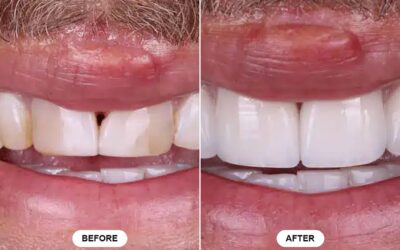
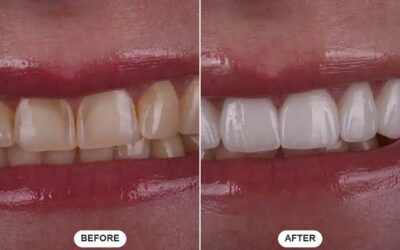
Real Patient Results: Dental Implant vs. Dental Bridge
These actual patient cases from McOmie Family Dentistry demonstrate how a dental implant and a traditional dental bridge can restore a missing tooth. Although both patients achieved a restored smile, the underlying treatment approaches were different.


Actual McOmie Family Dentistry patients. These cases illustrate front-tooth replacement. Individual treatment needs and results vary.
Dental Implant vs. Bridge Comparison
| Consideration | Dental Implant | Traditional Dental Bridge |
|---|---|---|
| Neighboring teeth | Generally no reshaping required | Requires reshaping supporting teeth |
| Jawbone preservation | Can help maintain surrounding bone | Does not replace the missing root |
| Treatment time | Typically several months | Typically a few weeks |
| Surgery required | Yes | Generally no |
| Upfront cost | Typically higher | Typically lower |
| Longevity | Implant post may last decades; crown may need replacement | Can last a decade or longer with proper care |
| Daily maintenance | Brushing and cleaning around the implant crown and gumline | Additional cleaning underneath the bridge |
| Potential complications | Implant failure, inflammation, bone loss, crown or component damage | Decay, supporting tooth failure, bridge damage |
| Repair and replacement | Crown can often be replaced independently if the implant remains healthy | Problems with a supporting tooth may require replacement of the entire bridge |
| Often best suited for | Patients with healthy neighboring teeth and sufficient bone support | Patients whose neighboring teeth already need crowns or who want to avoid implant surgery |
How a Bridge Affects the Neighboring Teeth Beside the Gap
To place a traditional bridge, your dentist must reshape the two teeth next to the gap so crowns will fit over them. If those neighboring teeth are healthy, with no large fillings or significant damage, that preparation means removing healthy tooth structure from teeth that otherwise may not need restorative treatment.
For many patients, a bridge remains a good, lasting solution. However, the preparation is irreversible. Once those teeth are prepared for a traditional bridge, the removed tooth structure cannot be restored naturally, and the teeth will generally require continued restorative coverage. If one of the supporting teeth develops a problem years later, the entire bridge may be affected.
Because a dental implant is supported by the jawbone, the teeth on either side generally do not need to be reshaped to support the restoration. This allows you to preserve more of your natural tooth structure. The American Dental Association’s consumer guidance on dental implants identifies preserving neighboring teeth as an important benefit of implant treatment.
If the teeth beside your gap are healthy, an implant offers the advantage of preserving those teeth. If they already need crowns or significant restorative work, a bridge may address multiple dental needs at once.
Bone Preservation: Why the Jaw Changes After You Lose a Tooth
When a natural tooth is in place, its root transfers chewing forces into the surrounding jawbone. These forces contribute to the ongoing process of bone remodeling, which helps maintain the bone supporting your teeth.
After a tooth is lost, the bone and surrounding tissues begin to remodel. Over time, the ridge where the tooth used to be can become narrower or lose height. A traditional bridge replaces the visible portion of the missing tooth but does not replace its root, so bone beneath the missing tooth can continue to shrink. You may not notice these changes, but they can affect your future tooth replacement options.
A dental implant places a replacement structure directly into the jawbone. Once the implant integrates with the bone and supports a functioning restoration, it can help maintain the surrounding bone. However, implants do not eliminate all bone remodeling or guarantee that future bone loss will not occur.
The American Academy of Periodontology identifies bone preservation and the ability to preserve neighboring teeth as important advantages of single-tooth dental implants.
In our practice, when someone has gone a few years with a gap before replacing a single back tooth, we often see on the scans that the ridge in that spot has narrowed or settled compared to the other side. It is rarely something the patient has noticed day to day, and it does not always change the treatment plan. However, evaluating the neighboring teeth and the available bone during a consultation helps us make a recommendation based on more than upfront cost. In some cases, that evaluation may point us toward bone grafting first or toward a traditional bridge rather than immediate implant placement.
If you have already been missing the tooth for a while and some bone has been lost, you may still be a candidate for an implant. Bone grafting to rebuild support can often provide the additional foundation needed for implant placement. Your dentist can evaluate whether grafting is necessary and how it would affect your treatment timeline and cost.
Comparing Lifespan, Cost, and Long-Term Value of Implants and Bridges
A dental implant typically costs more upfront than a traditional bridge. Implant treatment involves surgical placement, healing time, and the fabrication of a custom restoration. Additional procedures, such as bone grafting, can also increase the total treatment cost. A bridge is often less expensive initially and faster to complete, which can be important for patients with budget or timeline considerations.
Both restorations can provide many years of function. A well-made bridge can last a decade or longer with good care. A successful dental implant may remain functional for decades, although the crown attached to it may eventually require repair or replacement. Oral hygiene, bite forces, overall health, smoking, and the condition of the surrounding teeth and tissues can all influence longevity.
A 2007 systematic review by Pjetursson and colleagues compared the long-term survival of several types of tooth-supported and implant-supported restorations. The estimated 10-year survival rates for implant-supported single crowns and conventional tooth-supported bridges were similar.
10-year restoration survival rates
Source: Pjetursson et al., 2007 systematic review. Historical pooled estimates, not individual patient predictions. The bridge estimate includes a broader category of conventional tooth-supported fixed dental prostheses and is not limited to three-unit bridges replacing one missing tooth. PubMed
Although these historical survival estimates are similar, survival does not necessarily mean a restoration has remained free of complications or additional treatment. The figures also do not establish that the two treatments have identical outcomes for every patient.
One important distinction is that a dental implant and its crown are separate components. If the crown eventually needs replacement, the implant itself may remain healthy and functional. A 2012 systematic review by Jung and colleagues evaluated implant survival and implant-supported crown survival separately, highlighting why these components should not be treated as having the same lifespan.
With a traditional bridge, a problem involving one of the supporting teeth may require replacing the entire restoration. This is why comparing survival rates alone does not tell the full story of long-term treatment value. The potential impact on your remaining natural teeth, the complexity of future repairs, and the cost of additional treatment are also important considerations.
Paying for an Implant or a Bridge
Dental implant coverage varies considerably by insurance provider and individual plan. Some plans contribute toward the implant, abutment, or crown, while others provide limited or no implant coverage. Coverage for traditional bridges also varies, so it is important to understand your specific dental benefits before choosing a treatment.
At McOmie Family Dentistry, we work with most dental insurance plans and offer financing options through Cherry and CareCredit. Our team can help you understand your estimated out-of-pocket expenses and available dental insurance, financing, and payment options before you begin treatment.
When comparing costs over 10 or 20 years, consider more than the initial treatment expense. A bridge may eventually need replacement, and if a supporting tooth develops a problem, additional dental work may be necessary. An implant crown may also require repair or replacement, and complications involving the implant or surrounding tissues can increase future costs.
Neither option guarantees lower lifetime costs. Understanding the condition of your teeth and jawbone can help your dentist identify which treatment may offer better long-term value in your particular situation.
For additional information about traditional bridges, including their construction and maintenance, read our guide on how dental bridges are made and cared for.
What Happens if Your Implant or Bridge Needs Repair or Replacement?
Another important consideration when comparing dental implants and bridges is what happens when they need repair or replacement years later. The two restorations have different supporting structures, which can influence the complexity and cost of future dental treatment.
Repairing or Replacing an Implant Crown
If an implant crown chips, cracks, or wears down, your dentist may be able to repair or replace the crown without removing the implant itself. As long as the implant remains stable and the surrounding gum and bone are healthy, it can often continue to support a new crown.
Other mechanical complications, such as a loose abutment screw, may also be addressed without replacing the entire implant. The appropriate treatment depends on the design of the restoration and the nature of the problem.
However, implants are not immune to complications. Although an implant cannot develop a cavity like a natural tooth, the surrounding gum tissue and bone can develop disease. Peri-implantitis is an inflammatory condition involving progressive loss of the bone supporting an implant. It can require additional treatment and may threaten the implant’s long-term stability.
Consistent home care, professional cleanings, and regular dental examinations help your dentist monitor the health of the tissues surrounding your implant and identify potential problems.
Repairing or Replacing a Dental Bridge
A traditional bridge depends on the health of its supporting teeth. If one of those teeth develops decay, fractures, or requires root canal treatment, your dentist may need to remove or replace the bridge.
In some cases, a dentist may be able to perform root canal treatment through an existing bridge crown. In others, removing the bridge may be necessary to properly evaluate and treat the supporting tooth.
If a supporting tooth can no longer be saved, the original bridge design may no longer be an option. Your dentist may need to consider a different bridge design, dental implants, or another tooth replacement solution.
These differences matter when comparing the potential lifetime costs of each treatment. It is not just about how long the original restoration lasts, but also what additional treatment may involve and how it could affect your remaining natural teeth.
Daily Maintenance and Preventive Care
Both implants and bridges require consistent oral hygiene and professional dental care. Neither restoration eliminates the need for regular brushing, interdental cleaning, and dental examinations.
With a single implant crown, daily care includes cleaning around the crown and along the gumline. Your dentist or dental hygienist can recommend appropriate cleaning techniques and products based on the design of your restoration.
With a traditional bridge, you also need to clean beneath the artificial tooth and around the supporting crowns. A floss threader, specialized dental floss, or an appropriate interdental cleaning device can help you reach areas that ordinary floss may not easily access.
Maintaining healthy supporting teeth and surrounding tissues is essential to the long-term success of either restoration.
When a Bridge May Still Be the Better Choice for a Single Tooth
A dental implant is not automatically the best choice for every missing tooth. There are several situations in which a traditional bridge may be the more appropriate treatment.
When the Neighboring Teeth Already Need Work
If the teeth on both sides of your gap already have large fillings, old crowns, or significant damage, preparing them for a bridge may involve less sacrifice of healthy tooth structure than preparing two otherwise healthy teeth.
If both teeth already need crowns and have sufficient structural and periodontal support, a traditional bridge may allow your dentist to address those restorative needs while replacing the missing tooth.
The condition of the supporting teeth remains important. Teeth with extensive damage, inadequate bone support, or a poor long-term prognosis may not be suitable bridge anchors.
When Bone or Health Factors Favor a Bridge
If significant bone has been lost and you prefer not to pursue bone grafting, or if a medical condition makes implant surgery less advisable, a traditional bridge may provide a suitable alternative without requiring surgical implant placement.
Smoking, poorly controlled diabetes, and other conditions that affect healing can influence the predictability of implant treatment. These factors do not necessarily prevent someone from receiving an implant, but they should be evaluated as part of the treatment planning process.
Your dentist can assess your oral health, medical history, and available bone to determine whether an implant or a bridge is more appropriate for your circumstances.
When Timeline and Budget Shape the Decision
A traditional bridge can often be completed within a few weeks, while implant treatment typically takes several months to allow the implant to integrate with the jawbone. Additional procedures, such as bone grafting, may extend the implant treatment timeline.
If you need a replacement tooth within a shorter timeframe, or if the initial treatment cost is an important consideration, a bridge may be a practical solution that provides many years of function.
The goal is to select a treatment that addresses your immediate needs while considering the long-term health of your remaining teeth, gums, and jawbone.
Five Questions to Ask Your Dentist Before Choosing an Implant or Bridge
Every patient has different dental needs, and the best treatment is not necessarily the one with the longest estimated lifespan or the lowest upfront cost. Before deciding how to replace your missing tooth, consider asking your dentist these five questions.
Are the teeth beside my missing tooth healthy, or do they already need crowns? The condition of the neighboring teeth can significantly influence whether an implant or bridge is more appropriate.
Do I have enough jawbone to support an implant without bone grafting? Understanding your available bone can help you anticipate additional procedures, healing time, and treatment expenses.
What factors could affect the long-term success of either treatment in my case? Your bite, oral hygiene, gum health, medical history, and other individual factors can influence treatment outcomes.
What would repairing or replacing each restoration involve? Understanding the potential consequences of future complications can help you evaluate each option beyond its initial lifespan.
What is the estimated total cost of each option, including any additional procedures? Ask for an estimate that includes the necessary components, preparatory procedures, and anticipated insurance contributions.
The answers to these questions can help you make a more informed decision based on your oral health, budget, treatment preferences, and long-term needs.
Talk Through Your Single-Tooth Options With McOmie Family Dentistry
The best way to determine whether a dental implant or bridge is right for you is to evaluate the specific area where your tooth is missing. The condition of your neighboring teeth, available jawbone, bite, overall health, and treatment goals all help determine which option is more appropriate.
At McOmie Family Dentistry, we consider both your immediate restorative needs and the potential long-term impact of treatment on your remaining natural teeth. Our goal is to help you understand the benefits, limitations, treatment timeline, and estimated costs of each suitable option before making a decision.
Dr. Mark D. McOmie, DMD, and Dr. Caleb Canada, DDS, help patients throughout Chattanooga, Hixson, and East Brainerd explore their tooth replacement options.
If you are deciding between a dental implant and a bridge for one missing tooth, schedule a consultation to review your options. We can evaluate your oral health and help you choose a treatment that fits your individual needs.