
Quick Summary
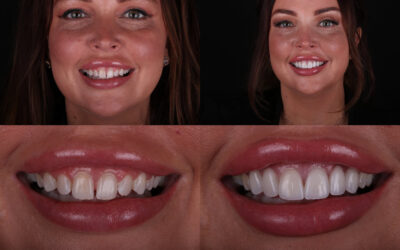
A smile makeover works best as a planned sequence, not a single appointment. For many patients, that means aligning crowded or uneven teeth first, whitening the natural teeth to a settled shade next, and placing veneers or crowns last so the final restorations match a foundation that is done changing. Doing it in this order helps the result look intentional and cohesive rather than patched together. Skipping or reordering steps often means redoing work you already paid for, which is exactly the outcome you are trying to avoid.
Alignment comes first so restorations cover teeth already in the right positions.
Whitening changes only natural enamel, so the shade must be set early.
Veneers and crowns are designed last, matched to a finished foundation.
A customized timeline protects your investment and the natural look you want.
Why the Order of Smile Makeover Treatments Matters
You have saved for this. You have a picture in your head of how you want to feel when you smile in photos again, and you do not want to spend that money only to look in the mirror and think the color is still a touch off or the teeth still sit a little crooked. That worry is a fair one, and it is usually the sequencing, not the individual treatments, that decides whether the result feels right.
It helps to think of a full smile makeover as a staged plan built over weeks or months, where each step sets up the next. The order matters because your teeth can keep changing right up until the restorations go on. If we place veneers before your teeth are in their final positions, or before the natural shade has settled, the porcelain is committed to a target that is still moving. Porcelain does not shift with your bite, and it will not respond to whitening gel later. Once it is bonded, that is the color and that is the position.
The National Institute of Dental and Craniofacial Research (NIDCR) offers a helpful directory of dental and craniofacial health topics worth browsing before any big cosmetic decision. The short version for our purposes is that healthy structure and a settled foundation tend to help cosmetic work last and look better. That is why we so often start underneath the surface before we ever talk about the color of the final smile.


Step One: Aligning Your Teeth Before Cosmetic Work Begins
Say two of your front teeth overlap slightly, and one sits rotated. It is tempting to cover the whole thing with veneers and call it solved. The trouble is that veneers placed over crowded or rotated teeth are working against the underlying position the entire time. To make crooked teeth look straight with porcelain alone, more natural tooth structure sometimes has to be reduced, and the finished veneers can end up bulkier or angled in ways that can read as artificial.
Moving the teeth into better positions first usually gives the restorations a cleaner, healthier base to sit on. When crowding and spacing are corrected ahead of time, veneers or crowns can cover teeth that are already where they belong, which often means preserving more of your own enamel and a more natural final contour.
For many adults, clear aligners like Invisalign can handle this stage comfortably and without the look of traditional braces. The American Association of Orthodontists notes that clear aligner treatment can address crowding, spacing, and certain bite issues, though it also emphasizes that not every case is a candidate and results depend on the situation. That last point matters. Part of your planning visit is an honest read on whether alignment is needed at all, or whether your teeth are already positioned well enough to move forward.
If your bite is uneven, correcting it now can also protect the finished work. Restorations that fight an off bite may wear or chip faster. A settled, balanced bite gives the veneers and crowns placed later a fair chance to hold up.


Step Two: Whitening Your Natural Teeth to Set the Shade
This is the part that surprises people the most. Whitening only works on natural enamel. It does nothing to porcelain. So the shade of your natural teeth has to be decided before any veneer or crown is made, because the restorations get color-matched to whatever your teeth are at that moment, and they will hold that color permanently.
If you whiten after the veneers are already in, your natural teeth around them can lighten while the porcelain stays put. That mismatch is often what makes a smile look uneven, where a few teeth glow brighter than the ones beside them. Setting the shade first helps you avoid that trap.
That is also why whitening comes after alignment. Once your teeth are in their final positions, the surfaces are easier to whiten evenly, and we are not adjusting shade on teeth that are about to move.
Professional teeth whitening can lift the natural shade several levels for many patients, and the American Dental Association offers balanced consumer guidance on whitening covering both in-office and at-home options. After whitening, we usually let the color settle for a couple of weeks before recording the final target shade. Freshly whitened teeth can look slightly brighter at first and then relax to a truer tone. Matching restorations to that stabilized shade, rather than the day-one shade, helps keep the final smile consistent.
In our clinical experience, the mismatched look people worry about almost always traces back to a shade that was locked in before it had settled. When we record the target color on freshly whitened enamel, teeth can drift a shade or two over the following weeks, and the porcelain that was matched to that brighter moment can end up looking lighter than the natural teeth around it. Giving the color time to relax before we commit the restorations is one of the quiet steps that keeps the whole smile reading as one.
Step Three: Placing Veneers and Crowns to Match a Settled Smile
By the time we design the restorations, the hard decisions are already made. The teeth are where they should be, the color is set, and now the porcelain gets built to match a foundation that is finished changing.
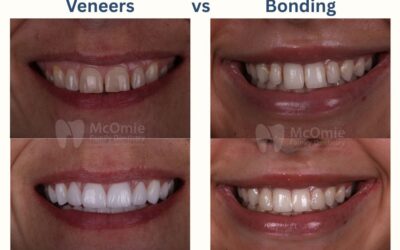
Porcelain veneers are thin shells bonded to the front of teeth, and they do their best work when the teeth beneath them are aligned and the neighboring natural teeth are the shade you want to keep. Where a tooth needs more coverage or has had significant restoration, a dental crown, which caps the whole tooth, may be the better choice. In a full makeover, veneers and crowns are often planned together so they read as one cohesive smile rather than a set of separate fixes.
Because everything upstream is settled, the lab can match color, translucency, and shape to your surrounding teeth with far more confidence. The goal is a result that looks like it grew there, where a stranger would not be able to point to which teeth were treated. That intentional, matched look is the payoff for doing the earlier steps in order. In our clinical experience, reversing the sequence tends to mean matching restorations to a moving target, and then either living with the compromise or paying to redo work that was fine the first time except for its timing.
How We Plan Your Smile Makeover Timeline in Chattanooga
Your first visit is a conversation and an assessment, not a sales pitch. Dr. Mark D. McOmie, DMD or Dr. Caleb Canada, DDS will look at your teeth, your bite, and your gums, ask what bothers you and what you are hoping to feel afterward, and then map out which steps you actually need. Some people need all three stages. Others already have straight teeth and only want whitening and a few veneers. The plan is built around your mouth, not a template.
Timeframes vary. If alignment is part of your plan, that stage alone can run several months depending on how much movement is needed. Whitening and the settling period add a few more weeks. Designing and placing veneers or crowns typically involves a couple of visits after that. A realistic multi-step makeover often spans several months from start to finish, and knowing that up front tends to make the process feel calmer, not longer.
On cost, McOmie Family Dentistry works with most dental insurance plans, and we offer financing options so a makeover can be spread out over time. Cosmetic portions are often not covered by insurance, but restorative pieces like crowns sometimes are, and our team will help you understand what applies to your specific plan before you commit to anything.
Start Planning Your Smile Makeover with McOmie Family Dentistry
If you have been holding onto that saved-for smile and want to know the honest order of operations before spending a dollar on veneers, the next move is a conversation. We serve patients across Chattanooga, Ooltewah, Hixson, and East Brainerd, and we would be glad to sit down, look at your teeth, and sketch out a plan built for your goals and your budget.
You can schedule a consultation whenever you are ready. Come with your questions and the smile you have in mind, and we will walk you through what your plan could look like, step by step.