Quick Summary
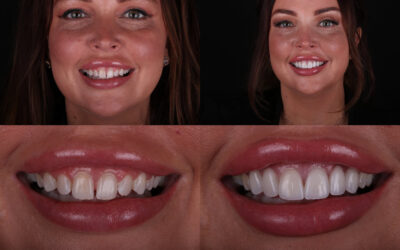
If your teeth look shorter than they used to, it is usually not your imagination. Years of normal wear, grinding, and subtle bite changes flatten the edges of teeth and reduce their visible length. The result is a smile that can feel less full or less defined, even when nothing is technically wrong. Dentists restore length and shape using bonding, veneers, or crowns depending on how much tooth structure has been lost and what your bite is doing under load. The right plan addresses the cosmetic side and the underlying mechanics, so the result holds up.
- Teeth shorten gradually from enamel wear, grinding, and acid exposure, not from sudden damage.
- Even a one-millimeter loss of length can change the entire balance of a smile.
- Bonding suits minor wear, veneers handle moderate cosmetic cases, crowns rebuild structure.
- Treating the bite alongside the cosmetic issue is what separates short-term from lasting results.
Why teeth look shorter as you get older
Most patients do not notice the change until they pull up an old photo. The shift happens slowly.
Teeth are under load constantly. Every meal, every clench, every nighttime grind takes microscopic amounts of enamel off the biting edges. Over years the math adds up. Edges that were once softly rounded become flat, and the teeth that used to show generously when you smiled start to disappear behind the lip line. This kind of slow change is the most common reason patients walk into a cosmetic dentistry consultation: nothing is broken, but the smile no longer feels like the one they had.
Grinding (bruxism) is one of the biggest drivers, and most patients who grind do not know it because most grinding happens at night. According to the American Dental Association, more than 70 percent of dentists reported seeing signs of teeth grinding and clenching in their patients in a 2021 survey, a sharp increase over prior years. Acid exposure from soda, citrus, wine, sparkling water, or reflux softens enamel temporarily, which makes day-to-day chewing more abrasive than it should be. Aging adds a baseline of slow enamel thinning on top of everything else.
What worn teeth actually look like in the mirror
When dentists talk about “short teeth,” they usually mean teeth that have changed shape, not teeth that have lost height in the bone. The visual cues:
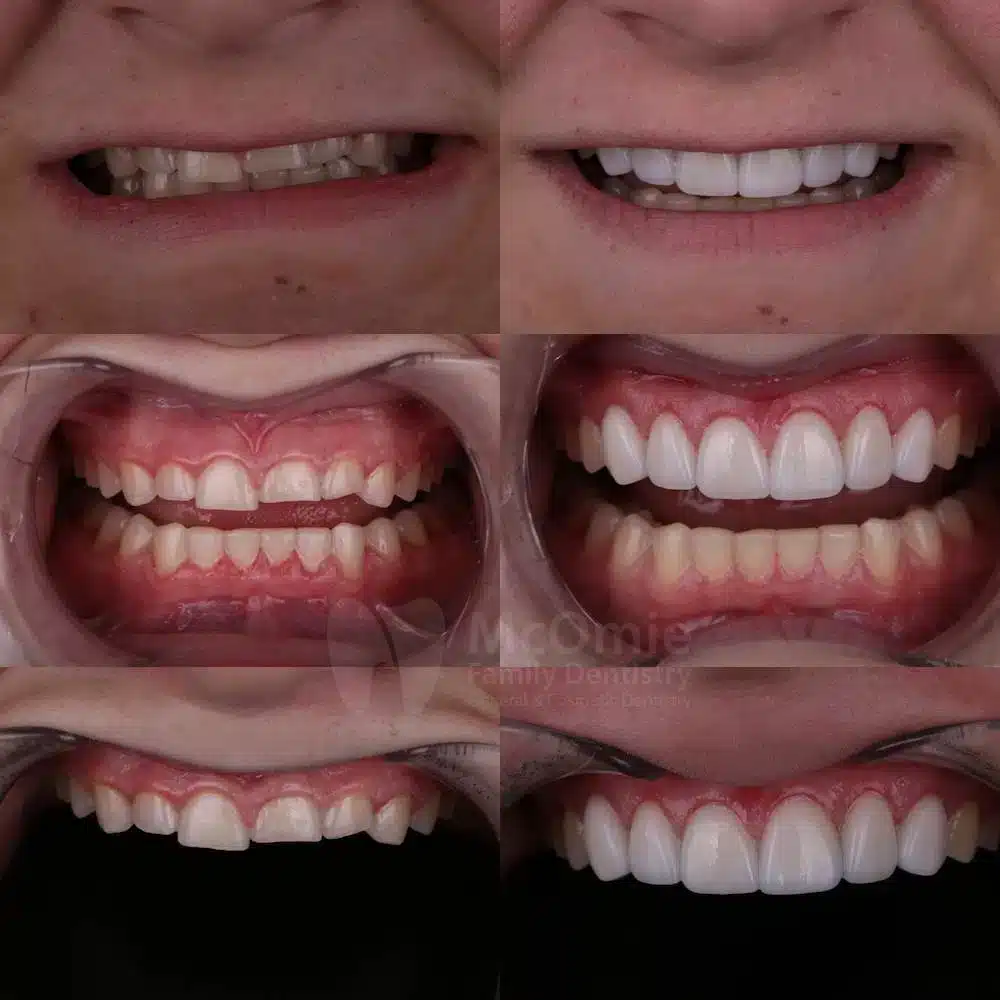
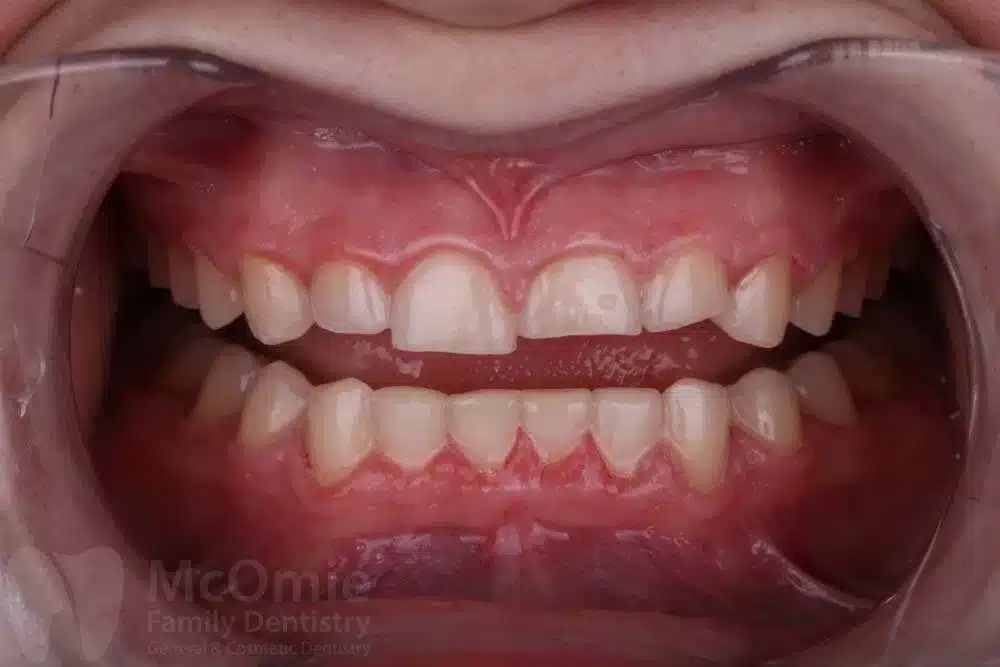
- Front teeth look flatter on the bottom edge instead of slightly rounded.
- Edges look uneven, with small chips or rough spots you can feel with the tongue.
- Less tooth shows when you smile, especially in photos.
- The smile looks compressed compared to older pictures.
- One or two teeth are noticeably longer than the rest because of uneven wear.
Individually, each cue is subtle. Together they are why a smile starts to look tired even when the teeth are otherwise healthy.
Why a small change in length changes the whole smile
Tooth length plays a bigger role than most people expect.
When the upper front teeth sit slightly longer than the canines, the smile follows a gentle curve that reads as balanced. When wear flattens that curve, the smile reads compressed. The lips also need a certain amount of tooth length to drape over and rest against, so as teeth shorten, the lower face can look slightly compressed too.
Patients rarely come in saying “my teeth are short.” They come in saying their smile looks tired, less defined, or less like them. The underlying issue is almost always length.
The causes Chattanooga dentists see most often
The wear pattern is rarely caused by one thing. It is usually a combination of three.
Grinding and clenching. Repeated pressure on the same teeth wears down enamel and can crack older fillings. Some patients clench during the day in traffic or at the computer. Most grind at night without knowing it.
Bite imbalance. When certain teeth hit harder than others, those teeth take force they were not designed for. Wear accelerates on the high spots, which changes the bite further, which moves load somewhere else. It snowballs.
Acid exposure. Citrus, soda, sparkling water, wine, and reflux all soften enamel. Soft enamel wears faster under any chewing or grinding load. Frequent grazing keeps the mouth in a more acidic state than three meals a day would.
Existing dental work matters too. A crown or filling that slightly changes how the bite hits can shift force to other teeth and start the cycle.
How dentists restore length and shape
The right restoration depends on how much tooth structure is left and what the bite is doing under load. There is a real difference between rebuilding a millimeter of edge and rebuilding a tooth that has lost half its visible structure.
Bonding. Composite resin rebuilds small areas of lost edge. It is conservative, single-visit, and the right call for patients whose wear is mostly cosmetic and whose bite is stable. Bonding does not last forever and can chip under heavy grinding, so candidate selection matters.
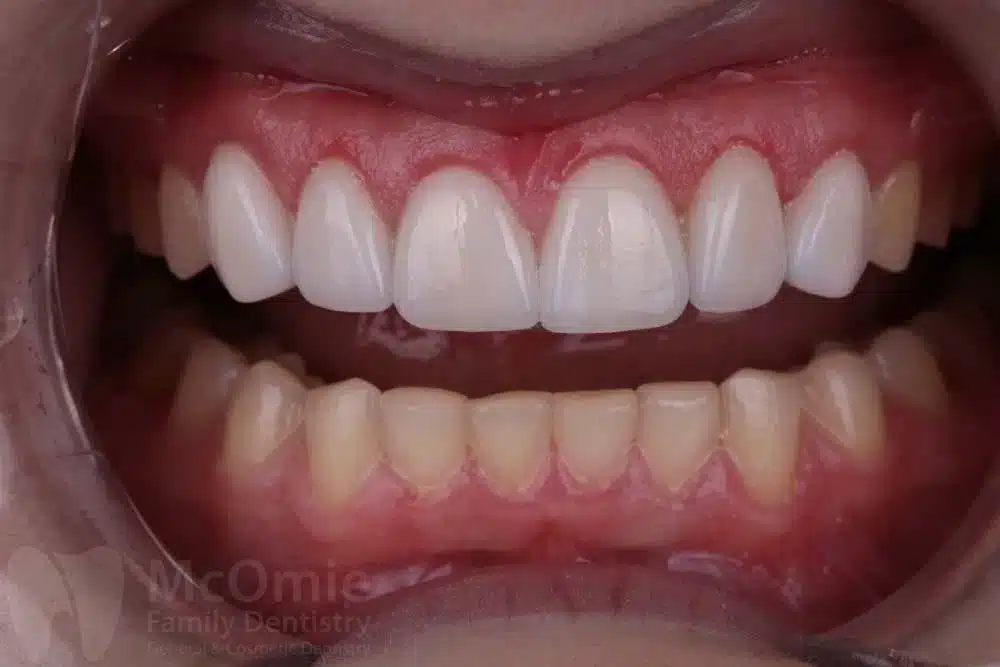
Veneers. Modern porcelain veneers allow precise control over length, contour, and color across the visible smile. They can rebuild lost length while looking natural in any light. The decision between veneers and crowns depends on how much underlying tooth has been lost and how much support the restoration needs to provide.
Crowns. Crowns cover the entire visible portion of a tooth and distribute biting forces across what remains. When wear has progressed past surface level, or the tooth is also cracked or heavily filled, a dental crown is usually the more durable answer.
In meaningful wear cases, restoring length is not just about adding material. It is about designing the new shape to work with how your jaw closes, often with a nightguard added to protect the work.
When wear stops being only cosmetic
Worn teeth start as a cosmetic concern and quietly become a functional one.
As enamel thins, the dentin underneath becomes exposed and teeth get more sensitive to hot, cold, and sweet. Cracks travel more easily through teeth that have already lost structure. In advanced cases the bite collapses slightly, which means the lower face can look shorter than it used to. That is a signal wear has moved past cosmetics.
Treating it earlier is almost always simpler, less expensive, and longer-lasting than waiting until something breaks.
Signs it is time to have it evaluated
If you are noticing changes in your smile, an exam is worth scheduling even if nothing hurts. Patients who fit one or more of these are usually good candidates for the conversation:
- Front teeth look flatter or shorter than they did five or ten years ago.
- Edges look uneven, chipped, or feel rough to the tongue.
- Sensitivity that was not there before.
- You catch yourself hiding your teeth in photos.
- Your bite feels slightly different from how it used to.
How natural looking results are built
Most patients are not asking for a dramatic change. They want their smile refreshed, balanced, and recognizably theirs.
That outcome usually means rebuilding what was lost rather than designing something new. Subtle length adjustments, careful symmetry across the front teeth, and a shade matched to the rest of the smile produce a result people compliment without being able to identify why. Natural-looking porcelain veneers covers what we look at when planning a case for a finish that does not draw attention to itself.
Schedule a smile evaluation in Chattanooga
If your teeth look shorter, flatter, or more worn than they used to, an exam tells you what is causing the change and what your real options are. Bonding, veneers, and crowns all have their place. The right answer depends on what the bite and the structure are doing under load. Book a consultation at our Chattanooga office and we will walk you through the plan from there.
Sources
- American Dental Association, MouthHealthy: Teeth Grinding on bruxism prevalence among adult patients and signs of grinding-related wear.
- Advances in Preventive and Therapeutic Approaches for Dental Erosion (NIH PMC) on dietary acid exposure and enamel loss in adult patients.