Quick Summary
That sharp twinge when you bite down, then a quick jolt as you let go, is one of the most common signs of a cracked tooth. Whether you need a simple filling or a crown depends on three things: how deep the crack goes, whether it crosses a raised chewing point on the tooth, and how much bite force that tooth handles every day. Shallow cracks limited to the outer layer can often be repaired with a filling that bonds the space closed. Deeper cracks, especially on back teeth, usually need a crown, a cap that wraps the whole tooth so it cannot split further. A prompt exam is the only reliable way to know which one your tooth needs.
A filling reinforces a cracked tooth from the inside by bonding the space closed.
A crown wraps the tooth from the outside to protect it from splitting.
Depth, cusp involvement, and chewing load decide which repair holds up.
Cracks often spread over time, so an early exam usually means simpler treatment.
How Dentists Tell a Cracked Tooth From a Chipped or Sensitive One
The twinge you felt last week is a useful clue on its own. Cracked teeth often hurt in a very specific way: a sharp pain when you bite down on something, then a second, sometimes stronger jolt the moment you release the bite. That release pain happens because the two sides of the crack shift slightly and then snap back together, moving against the sensitive tissue inside. Many people also notice sensitivity to cold, heat, or sweet foods that comes and goes.
Something that surprises a lot of patients: a crack does not need a visible gap to be real. Some cracks are so fine they are hard to see even under good light, and they may only show up on close exam or imaging. So if you have been squinting in the bathroom mirror looking for a line and finding nothing, that does not mean nothing is wrong.
A chip is different. A chip is a piece of the outer surface that has broken away, and you can usually see or feel the rough edge with your tongue, often a jagged corner or a lost bit of enamel rather than the deep, on-and-off pain of a crack. Plain temperature sensitivity can come from many things, including worn enamel or gum recession, and does not always mean a fracture. The bite-and-release pain is the pattern that most often points to a crack.
Because cracks can range from tiny surface lines to fractures that threaten the whole tooth, the treatment ranges too. That is why some cracked teeth need only a small repair, some need dental crowns, and a few need more involved care. The American Association of Endodontists describes several distinct types of cracked teeth, each with its own treatment threshold, which is why a real exam matters more than guessing.
When a Chipped Front Tooth Needs a Crown
Chips follow similar logic to cracks, with different math. A small chip on the edge of a front tooth can often be smoothed and rebuilt with bonded tooth-colored material, because front teeth do not absorb the grinding load that molars handle all day. But when a chip removes enough of the tooth that the remaining edge is thin, or when the same corner keeps breaking after it has been repaired, a crown becomes the more durable answer. It covers the whole tooth instead of patching one corner, so the repair no longer depends on a weakened edge holding.
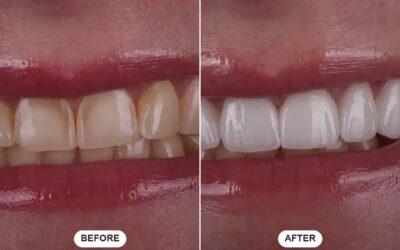
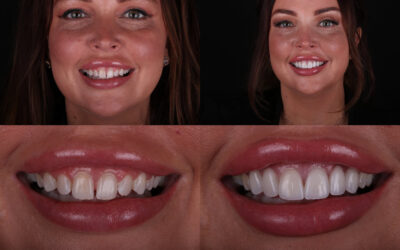
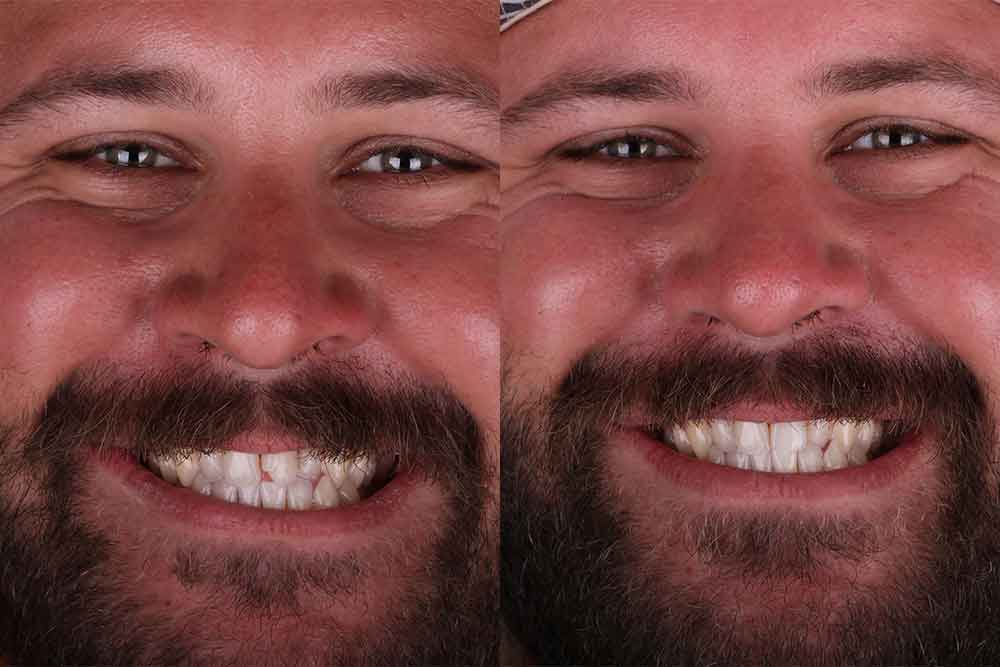
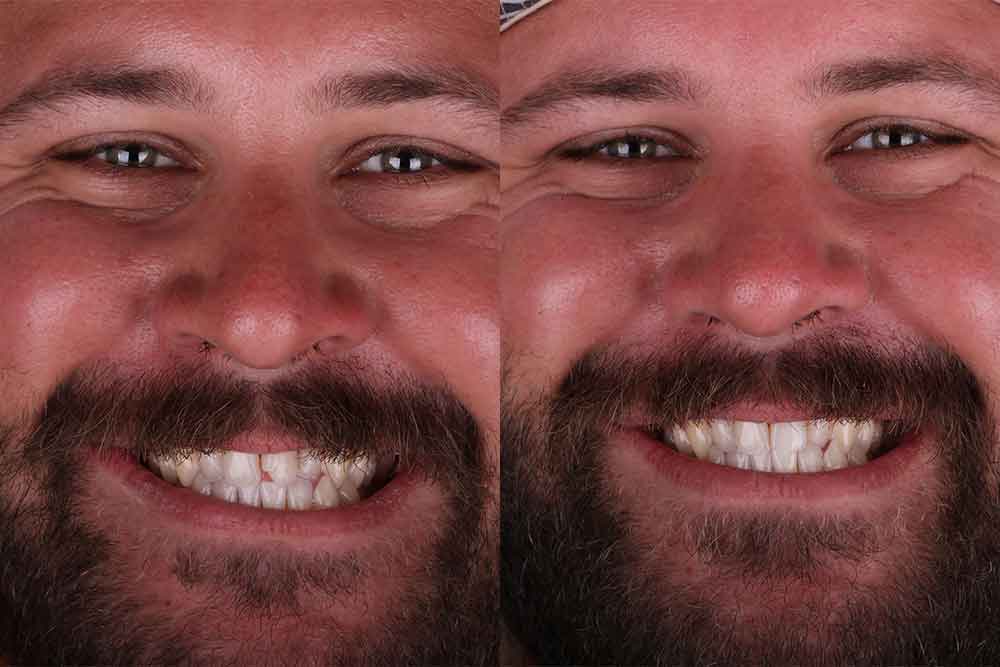
Front teeth carry one consideration that back teeth do not: they show. A crown on a front tooth is matched to the shade, shape, and translucency of the teeth around it, so the aim is a tooth that looks like it belongs rather than one that reads as repaired. Sometimes that means planning ahead. If you are whitening, or intend to, the crown can be made to match the shade you are working toward instead of the one you have today, since a crown does not lighten with whitening treatment the way natural enamel does. You can see more examples in our before and after photos of crown and bridge cases.
When a Filling Is Enough to Repair a Cracked Tooth
Not every crack calls for a crown. When a crack is shallow and stays within the enamel, the hard outer shell of the tooth, or affects only a small area, a filling can often be the right and lasting fix.
A filling works by cleaning out the damaged part of the tooth and bonding a tooth-colored material into the space. Once it sets, it reinforces the tooth from the inside, filling and sealing the crack so it stops catching food, temperature, and pressure. For many patients, a well-placed filling on a minor crack holds up comfortably for years.
The cracks that tend to do well with a filling share a few traits. They usually do not cross a cusp, one of the raised points on the chewing surface of a tooth. They sit on a tooth that does not carry heavy grinding force. And they have not reached the deeper, softer layer beneath the enamel. When all three of those are true, a filling can reinforce the tooth without the need to reshape it for a cap.
The reason this distinction matters comes down to simple physics. A filling supports the tooth from within, but it does not hold the outer walls together the way a wrap-around restoration does. A filling tends to be a good match when the tooth’s own structure is still strong enough to do most of the work.
When a Cracked Tooth Needs a Crown Instead of a Filling
Once a crack goes deeper or sits under real chewing pressure, the balance shifts. A crown often becomes the more protective choice.
It helps to think about where the crack has traveled. If it reaches into the dentin, the softer layer under the enamel that surrounds the nerve, or if it crosses a cusp, the tooth can flex slightly every time you bite. That flexing is what lets a crack keep spreading. A filling sitting inside a flexing tooth cannot stop the outer walls from moving apart, and over time the segments can work loose or the crack can run deeper.
A crown addresses this from the outside. It is a custom cap that fits over the whole tooth, wrapping it and holding all the segments together so they move as one solid piece instead of flexing along the crack. For cracked back teeth (your molars and premolars, which absorb the heaviest bite force) a crown is often the difference between saving the tooth and losing it later. When you feel a segment of tooth that seems to move, or a crack that has clearly split part of a cusp, that flexing is exactly what a crown is designed to control.
How We Decide Between a Filling and a Crown
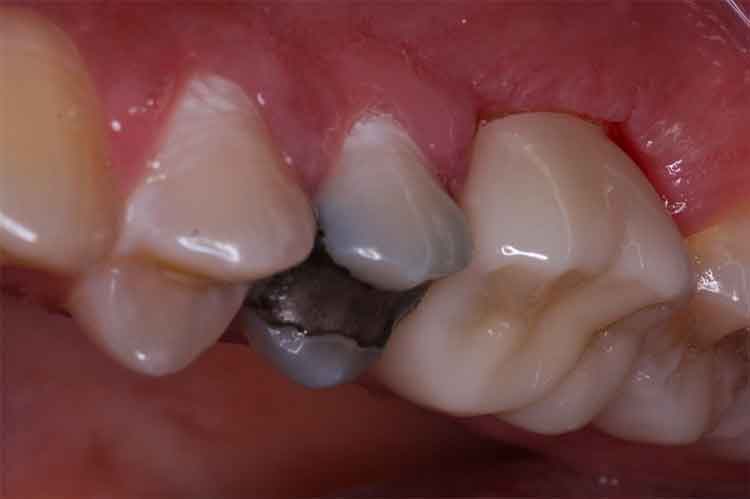
At McOmie Dentistry, the filling-versus-crown call usually comes down to a few things we check together at the chair. We look at how deep the crack runs, whether it stays within the enamel or reaches into the dentin below. We check whether it crosses a cusp, since a crack that involves one of those raised chewing points tends to open under pressure. And we factor in how much daily bite load that particular tooth carries, because a molar you grind on all day asks more of a repair than a tooth up front. When a crack is shallow, stays off the cusps, and sits on a lower-load tooth, a filling is often plenty. Once it crosses a cusp or dips into the dentin on a hard-working back tooth, wrapping the whole tooth usually protects it better for the long run.
Crowns are part of a broader set of restorative options that rebuild a damaged tooth, so the goal is always to choose the least involved repair that will actually protect the tooth over time. On a shallow crack, that is a filling. On a deep or load-bearing crack, protecting the whole tooth usually earns its keep.
What Happens if a Cracked Tooth Is Left Untreated
Timing matters a great deal in cracked tooth care. A crack does not heal on its own the way a small cut on your skin does, because tooth structure cannot regrow. Left alone, a crack often spreads a little at a time, especially on a tooth you chew with daily.
As a crack deepens, it can reach the nerve and blood supply at the center of the tooth. When that happens, the tooth may become more sensitive, ache on its own, or throb with temperature changes. At that point a root canal may be needed if the crack reaches the nerve, a procedure that removes the irritated tissue inside and often lets the tooth be saved and crowned afterward. A crack caught earlier, before it reaches that point, can sometimes be handled with a simpler repair.
There is also a threshold past which a tooth can split too far to save. A crack that runs down toward the root can divide the tooth into pieces that no longer hold together. The reassuring part is that this outcome tends to be far less common when a cracked tooth is looked at promptly.
None of this is meant to alarm you. The reason to act is not fear, it is options. The sooner a cracked tooth is examined, the more likely you are to have the full menu of choices, including the least involved ones. The American Dental Association offers helpful patient guidance on cracked and broken teeth, advising that you rinse with warm water and use cold compresses to keep swelling down, and it stresses visiting your dentist or an emergency room as soon as possible.
What to Expect During a Crown Appointment for a Cracked Tooth
If your exam points toward a crown, knowing the steps ahead of time takes a lot of the worry out of it.
It starts with a close look at the tooth, often with X-rays or a scan, to see how far the crack runs and whether the nerve is involved. This is also where the filling-versus-crown decision gets confirmed, because the picture is usually clearer with imaging than with the eye alone. Understanding how a healthy tooth is layered helps here, and the National Institute of Dental and Craniofacial Research offers plain consumer information on dental health topics like tooth decay and fillings if you want to read up.
Next, the tooth is numbed for comfort, then gently shaped so the crown can seat over it. After shaping, we capture the tooth’s exact form, either with a physical impression or a digital scan. From there, you may leave with a temporary crown while a custom one is made, or, depending on the case and the technology in the office, a same-day crown may be an option. We will talk through which path fits your tooth.
Comfort measures run through the whole visit, from numbing to checking your bite so the finished crown feels natural when you chew. For many patients the appointment turns out to be more straightforward than they expected. As for how long a crown lasts, that varies from person to person and depends on your bite, your habits, and daily care, so we will give you an honest picture rather than a blanket promise.
Talk With McOmie Family Dentistry About Your Cracked Tooth
If you have been living with that bite-and-release twinge, the kindest thing you can do for your tooth is have it looked at while your options are still wide open. A short exam is usually all it takes to know whether a filling will reinforce the tooth or a crown will give it the protection it needs. Whether you are close by or coming from Chattanooga, Hixson, East Brainerd, or Ooltewah, Dr. Mark D. McOmie, DMD and Dr. Caleb Canada, DDS are glad to take a careful look and walk you through the choice, no pressure, no judgment.
Ready to get an answer? schedule an exam with McOmie Family Dentistry and let us help you protect that tooth.