
Quick Summary
Porcelain veneers often last 10 to 15 years, and for many patients they can go longer with steady care and a little attention to daily habits. They are strong and beautiful, but they are not permanent, and honest planning starts with knowing that. What you do at home matters as much as what happens in the chair, from how you brush to whether you grind your teeth at night. Grinding, biting hard objects, and skipping checkups are the most common reasons veneers wear out sooner than they should. The good news is that most of the habits that protect them are simple, and small issues caught early are usually easier to handle.
Porcelain veneers often last 10 to 15 years, sometimes longer with consistent home and professional care.
Grinding, chewing ice, and using teeth as tools are common reasons they wear early.
Gentle brushing, a night guard, and regular checkups can meaningfully extend their life.
Chips, tiny gaps, or new sensitivity are worth a look sooner rather than later.
How Long Do Porcelain Veneers Last on Average?
For many patients, porcelain veneers last somewhere in the range of 10 to 15 years, and with good care they can often last longer than that. What they are not is permanent, and anyone who promises a lifetime with no maintenance is offering a story rather than a result.
The reason the range is a range comes down to you. Two people can get similar veneers on the same day and see very different lifespans, because their teeth, bites, and daily routines differ. Someone who grinds at night tends to put more stress on the porcelain than someone who does not. A person who flosses and shows up for cleanings tends to protect the gumline that supports the veneers, while someone who skips both may see trouble at the edges sooner.
The American Dental Association describes a porcelain veneer as a thin shell custom-made to fit on the front surface of your teeth, and notes that while porcelain veneers are strong and long-lasting, a veneer may chip, crack, wear down or loosen over time. That is a fair way to put it. Veneers are less like a single purchase and more like something you own and care for, the way you would a good pair of shoes or a car you plan to keep. The material is durable, and it also responds to how it is treated.
If you are weighing this against other cosmetic dentistry options, the longevity question is a real part of the value. A well-made veneer that lasts 12 or 14 years is doing a lot of quiet work for you every single day.
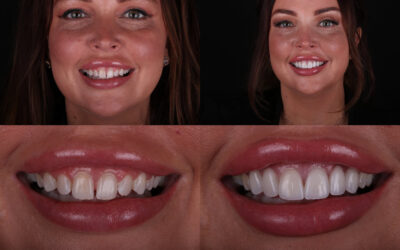
These two patients came to us with older veneers that needed replacing, for reasons ranging from fit and function to appearance and natural changes in the mouth over time.


What Shortens the Lifespan of Porcelain Veneers?
Most of what wears veneers out early comes from force and chemistry, and both are easier to understand than they sound.
Grinding and Clenching
The biggest factor is grinding, sometimes called bruxism, which for many people happens at night without their knowing it. The National Institute of Dental and Craniofacial Research notes that severe bruxism can damage teeth, including flattened, chipped, or cracked teeth and worn enamel, and dental restorations are not exempt. All that repeated pressure, hour after hour while you sleep, can chip an edge or stress the bond over time. If you wake up with a sore jaw or your partner mentions a grinding sound, it is worth telling us.
Everyday Force and Using Teeth as Tools
After grinding comes everyday force from habits you may not think twice about. Biting your fingernails. Chewing ice. Opening a stubborn bag of chips with your teeth because your hands were full. Using your teeth as a tool puts a sharp, concentrated load right on the edge of the porcelain, which is often exactly where a chip likes to start.
Gum Health
Gum health matters too. Veneers meet your natural tooth right at the gumline, and when the gums recede or become inflamed, that edge can become more exposed and more vulnerable. Healthy gums quietly protect the whole result.
Diet and Aging Materials
Then there is your diet. A steady stream of acidic food and drink, think citrus, soda, sports drinks, and wine, can slowly soften and wear the bonding at the margin, the edge where the veneer meets your tooth. And finally, time itself. Bonding materials age, and after many years the margins can pick up stain or begin to show wear. None of this is a reason for worry. It is simply the reality of a real material living in a real mouth.
How to Make Your Porcelain Veneers Last Longer
The habits that protect veneers are refreshingly ordinary, which is part of what makes them easy to keep.
Gentle Daily Care
Start with gentle daily care. Brush twice a day with a soft-bristled brush and a non-abrasive toothpaste, and skip the gritty whitening pastes that promise to scrub stains away, since that same grit can dull the polish on porcelain over time. Floss every day. Veneers do not get cavities, but the natural tooth underneath and the gums around them still need protecting, and that gumline is where a lot of long-term trouble either starts or gets prevented.
A Night Guard for Grinding
If you grind, a night guard is one of the best investments you can make in your smile. A custom guard, worn while you sleep, absorbs the force that would otherwise land on the porcelain. The Mayo Clinic notes that clenching or grinding can flatten, fracture, chip or wear down teeth, so protecting teeth from bruxism matters for people with veneers.
Protecting the Edges
Be a little kind to the edges. Cut apples and hard rolls instead of biting straight in with your front teeth. Retire the ice-chewing habit. Keep a pair of scissors handy so your teeth never become the backup tool.
Managing Stains at the Gumline
Watch your staining habits at the gumline. Porcelain resists stain well, but the natural tooth and the bonding at the margin can pick up color from coffee, tea, red wine, and tobacco. That is also why we usually talk about whitening your natural teeth before veneers are made, so the shade is matched from the start and your surrounding teeth stay in harmony with them.
And keep your regular checkups. More on that below, but the short version is that professional care catches small things while they are still small.
Signs Your Veneers May Need Repair or Replacement
You know your smile better than anyone, and you will often notice the early signs before we do.
A small chip along an edge is the most common one. Sometimes it is cosmetic and easy to smooth or repair, and sometimes it is a signal that grinding or an uneven bite needs attention. A tiny gap or dark line at the margin, where the veneer meets the tooth, can mean the bonding is aging or that a little decay has started underneath. New sensitivity to hot or cold that was not there before is worth mentioning too.
Color changes at the edges, where the surrounding tooth or the bonding line starts to look different from the porcelain, tend to show up gradually. So does a veneer that feels slightly loose or moves when you press it, which is often your cue to call rather than wait.
In our clinical experience, the veneers that go the distance tend to belong to patients who mention the small things early, a faint rough spot they can feel with their tongue, a hairline change at the edge they only notice under bathroom light. We often see the opposite pattern too, where a minor chip is left for a year or two and gradually opens the door to staining or wear at the margin that a quick visit could have settled. Catching these things early usually keeps the fix on the simpler end of the range.
None of these mean you did something wrong. They mean the veneer is doing its job and letting you know it needs a check. Early attention almost always keeps the fix simpler and less expensive than waiting until a small chip becomes a full replacement.
How Professional Care Extends the Life of Your Veneers
The work of keeping veneers healthy is shared. Your part happens at home, and our part happens at routine checkups and cleanings a couple of times a year.
At those visits, we clean along the gumline and margins in ways that home care cannot fully reach, and we protect the foundation the veneers depend on. We check your bite, because a bite that has shifted even slightly can put uneven force on certain teeth, and a small adjustment can relieve stress that would otherwise wear a veneer down. We look closely at each margin for early staining, tiny gaps, or the first hint of a chip, so we can address it before it grows.
Just as important is the conversation. When a veneer is entering its second decade, we will talk honestly with you about how it is holding up and what the timing of a replacement might look like, so nothing catches you off guard. Planning ahead is generally more comfortable than reacting to an emergency. Our goal is to help your investment give you every good year it reasonably can, and to be straight with you when it is time to think about the next step.
Talk With McOmie Family Dentistry About Your Veneers
Whether you are considering veneers for the first time, protecting a new set, or wondering how much life is left in veneers you have had for years, a conversation is the best starting point. We can assess your candidacy, review the condition of existing veneers, and build a simple maintenance plan that fits your habits and your bite. Patients from Chattanooga, Hixson, East Brainerd, and the surrounding communities are always welcome.
When you are ready, schedule a consultation with McOmie Family Dentistry and let us help your smile keep looking and feeling like itself for years to come.